

For most Chattanooga homeowners, composite decking is the most reliable long-term choice for this climate, with pressure-treated pine sitting comfortably behind it as the value option for anyone willing to commit to annual maintenance. Cedar lands in the middle for aesthetics and longevity.
PVC is the premium pick if you want minimal upkeep and the longest lifespan available. The right call depends on your budget, your tolerance for yearly maintenance, and how much sun your deck takes.
What Chattanooga’s Climate Actually Does to a Deck
The Chattanooga area sits in a humid subtropical zone with hot, sticky summers, mild winters, and somewhere around 52 inches of rainfall spread across the year, according to the National Weather Service’s climate data for the region. That combination is hard on outdoor wood. Moisture works into the grain, summer sun beats down on the surface, and the freeze-thaw cycles that creep in during January and February finish off whatever the humidity didn’t get to.
Decks built around here face three specific stressors. Constant moisture exposure that drives rot and insect damage in untreated wood. UV that fades natural color and breaks down sealers faster than in drier climates.
And a steady cycle of heating, soaking, and drying that flexes the boards over and over throughout the year.
Pick the right material for those conditions, and you’ll get a deck that holds up for decades. Pick the wrong one, and you’ll be sealing, sanding, and replacing boards by year five.
How the Four Main Decking Materials Hold Up Here
Pressure-Treated Pine
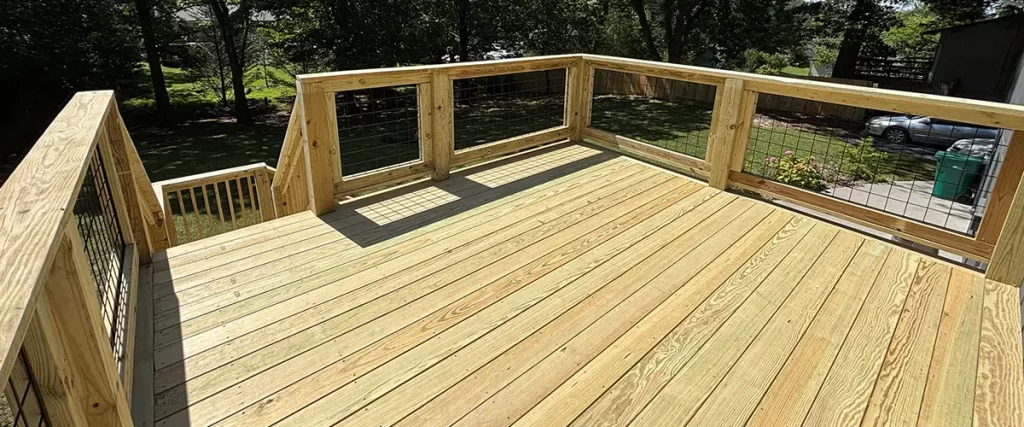
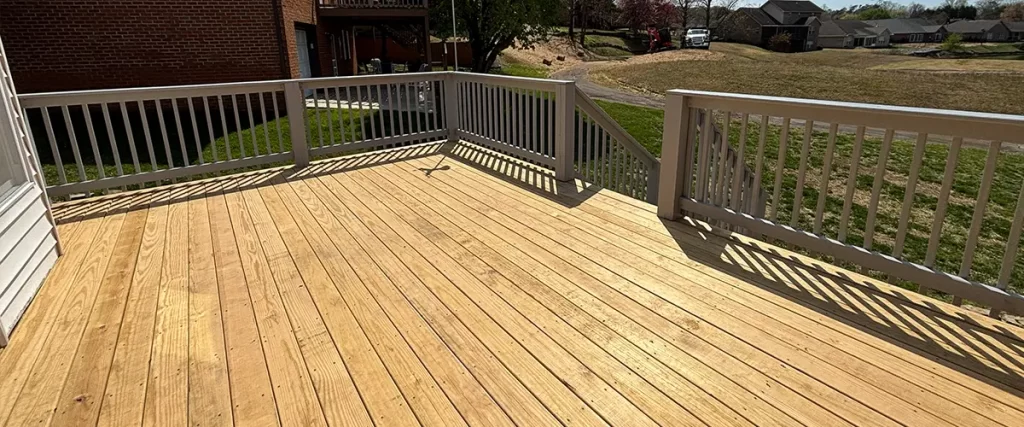
The most common deck material in the South, pressure-treated lumber is widely available, structurally solid, and has the lowest upfront cost on the list. It resists rot and insect damage thanks to the chemical treatment, but it still needs annual staining and sealing to look good and stay protected. Skip the maintenance for a couple of years in Chattanooga’s humidity, and the boards will check, gray out, and start to warp. Expect 10 to 15 years without regular care, 15 to 20 with consistent upkeep.
Cedar
A natural beauty that holds its own without chemical treatment. Cedar resists rot and bugs on its own and ages into a soft silver-gray if left alone, or holds onto its warm reddish tone with regular sealing. It runs more than pressure-treated pine but less than composite, and it brings the kind of authentic look that synthetic materials still can’t fully replicate. Maintenance involves annual sealing if you want to preserve the color, with a lifespan of 15 to 25 years in this climate.
Composite
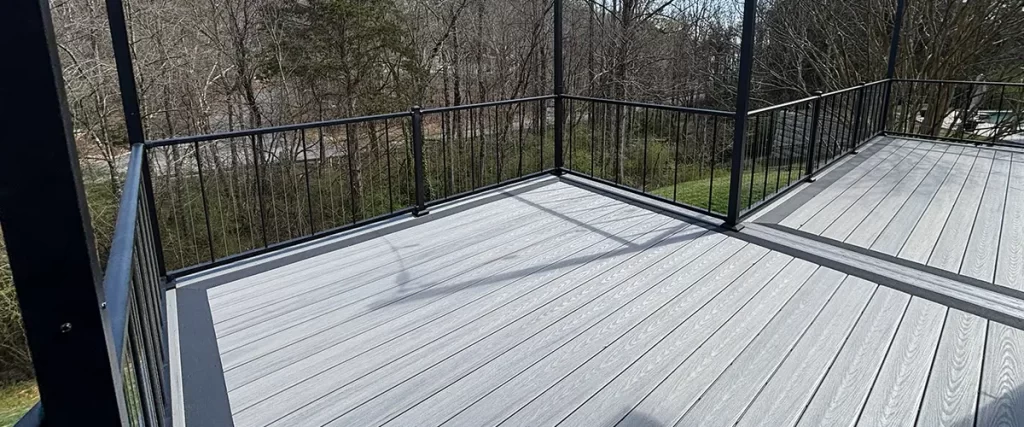
Composite decking is a blend of wood fibers and recycled plastic, engineered for durability and almost zero maintenance. Modern capped composite boards resist moisture, fade, stains, and insect damage without sealing or staining. According to research from the USDA Forest Service on wood-plastic composites, these materials have continued to improve in long-term performance over the past two decades, with major brands now offering stain warranties of 25 years or more. The upfront cost is higher, the maintenance is a light pressure wash a couple times a year, and the lifespan typically runs 25 to 30 years.
PVC Decking
Fully synthetic, made from 100% polymer with no wood fibers in the mix. PVC is the lightest and most moisture-resistant decking material on the market, completely impervious to rot, and the closest thing to a deck board that never needs maintenance. The price tag is higher than composite, the look has improved dramatically in recent years, and the lifespan can stretch past 50 years with minimal care. Worth the investment for homeowners who want the deck installed once and never thought about again.
Quick Comparison
| Pressure-Treated Pine | Cedar | Composite | PVC | |
| Upfront Cost | Lowest | Mid-range | Higher | Highest |
| Maintenance | Annual stain and seal | Annual sealing | Light pressure wash | Minimal |
| Lifespan | 10-20 years | 15-25 years | 25-30 years | 40-50+ years |
| Look | Classic wood grain | Warm natural tone | Engineered finish | Smooth, clean profile |
| Moisture Resistance | Good with upkeep | Naturally good | Excellent | Best on the market |
| Heat Underfoot | Cool to moderate | Cool | Warmer in direct sun | Warmest |
If you want to learn more about how the decking material affects the full project, our blog on what goes into a quality deck installation walks through how the framing and decking choices work together.
Which Material Makes Sense for Your Deck
If you’re building a smaller deck and the budget is tight, pressure-treated pine is the right call. The annual maintenance is real, but a 12×12 deck takes about half a Saturday to seal once a year. For homeowners who want the natural wood look without the chemical treatment, cedar is the sweet spot.
For deck-and-cover combinations, screened porches, or any raised structure that’s hard to access for maintenance, composite or PVC almost always pays for itself within ten years. The cost of repeatedly sealing an elevated deck or a covered space adds up fast, and synthetic materials remove that problem entirely. If you’re already considering adding a covered structure or screened porch, the case for composite gets stronger.
Full sun decks, especially those facing south or west, push composite and PVC boards to their hottest. Lighter colors stay more comfortable underfoot. Shaded decks can run any material without that concern.
FAQs
Does composite get too hot to walk on barefoot in the summer?
Darker composite boards in direct Chattanooga sun can reach uncomfortable temperatures during peak afternoon hours. Lighter colors stay much more manageable, and PVC tends to run slightly cooler than composite. Most homeowners pick a mid to light tone for full-sun decks and a darker tone for shaded or partially covered builds.
How often do I actually have to seal a pressure-treated wood deck?
Once a year is the right cadence in this climate, ideally in the spring before the worst of the summer humidity. Some homeowners stretch it to every 18 months on shaded decks, but anything longer than two years and you’ll start to see graying and surface checking.
Is composite decking worth the higher upfront cost?
For most Chattanooga homeowners, yes. The lifetime cost of composite is often lower than pressure-treated wood once you factor in two decades of annual staining materials and labor, and the time saved on maintenance is its own form of value.
Skip the Material Research, Just Talk to Someone Who Builds These Every Week
There’s a version of this decision where you spend two weekends scrolling through forums, comparing warranty fine print, and second-guessing the right call for your specific yard. There’s another version where you have a 20-minute conversation with someone who builds decks in this climate every week and walks you through the trade-offs based on your house, your sun exposure, and your budget.
We handle deck building across the Chattanooga area and would rather just answer your questions than send you back to research mode. Call us at (423) 398-4788 or message us here, and we’ll get you a real recommendation tied to your actual property.