

If you’re trying to decide between composite and wood decking for your Chattanooga home, here’s the short answer: both can work beautifully, but one of them is going to cost you a lot less time and money over the long haul.
In Chattanooga, we get hot, humid summers, unpredictable rain, and the occasional ice storm in winter. Your deck is going to take a beating no matter what it’s made of.
The real question is how much work you’re willing to do to keep it looking good, and how much you’re willing to spend on it.
This article breaks down the key differences between composite and wood decking, specifically through the lens of what works here in Chattanooga. We’ll talk about cost, durability, maintenance, and what homeowners around here actually experience year after year.
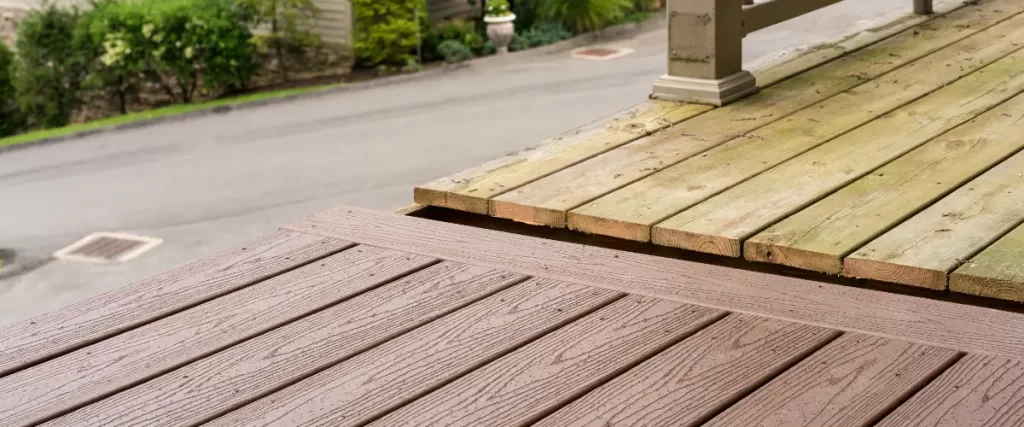
Composite vs Wood Decking: Quick Comparison
| Wood Decking | Composite Decking | |
|---|---|---|
| Upfront Material Cost | Lower | Higher |
| Annual Maintenance | High (staining, sealing) | Low (cleaning only) |
| Lifespan | 10–20 years | 25–30+ years |
| Moisture Resistance | Poor to moderate | High |
| UV Resistance | Low (fades/grays) | High |
| Insect Vulnerability | Yes | No |
| Natural Look | Yes | Close, but not identical |
| Environmental Impact | Varies by species | Uses recycled materials |
How Chattanooga’s Weather Affects Your Decking Material
Before we even get into the materials themselves, it helps to understand what we’re working with locally.
Chattanooga sits in a humid subtropical climate zone. That means:
- High summer humidity
- Rainfall totaling around 51–55 inches per year
- Temperatures that regularly dip into the 30s in winter and climb into the 90s in summer
- Strong UV exposure through the warmer months
Wood absorbs moisture. It expands when it’s wet, contracts when it dries out, and over time, that cycle causes warping, cracking, and splitting.
Composite decking handles that moisture cycle significantly better because it’s made with a blend of wood fibers and recycled plastic.
Wood Decking: The Case For It (And Against It)
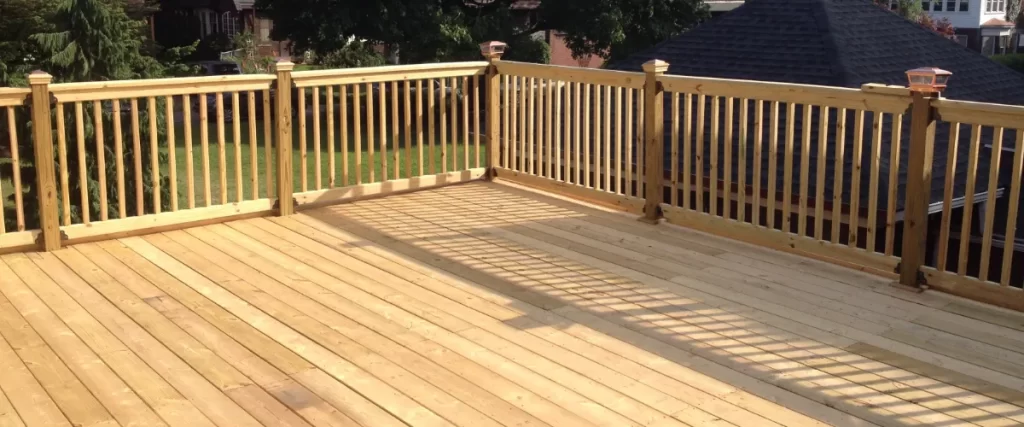
Natural wood has a warmth and character that’s hard to replicate.
The grain patterns, the texture under bare feet, the way a cedar or redwood deck looks on a summer evening, it has an aesthetic that a lot of homeowners are deeply attached to.
Popular Wood Species for Decks
When it comes to real wood decking in this region, you’re typically looking at a few options:
- Pressure-treated pine: the most affordable entry point, widely available
- Cedar: naturally resistant to rot and insects, easier to work with
- Redwood: beautiful grain, good durability, but harder to source locally
- Tropical hardwoods (like Ipe): extremely dense, long-lasting, but expensive and high maintenance
Pressure-treated lumber is what most budget-conscious homeowners go with around here. It holds up reasonably well, but it still requires annual maintenance. You’re looking at cleaning, staining, and annual sealing.
The Maintenance Reality of Wood
The material costs for a traditional wood deck might look attractive upfront, but ongoing maintenance adds up fast. A professional stain-and-seal job can run $800 to $2,000 or more, depending on deck size.
If you skip even one year in a humid climate like ours, you’re looking at potential insect damage, mold, and moisture warping that can cost much more to fix.
Wood also has a shorter lifespan than high-quality composite options. Most wood decking lasts 10 to 20 years. Premium hardwoods like Ipe can push beyond that, but they come with a significantly higher price tag and their own maintenance demands.
Composite Decking: What’s Actually Different
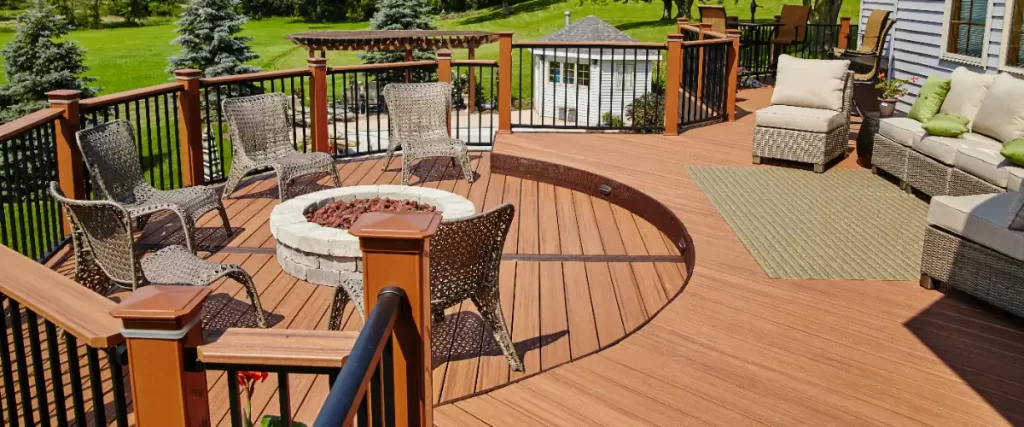
Composite deck boards are made from a combination of wood fibers and recycled plastic.
Most composite manufacturers today produce boards with a protective outer shell that significantly resists UV damage, moisture, and staining.
Why Composite Works Well in Chattanooga
A few specific reasons composite decking tends to outperform traditional wood decking in our climate:
- Water resistance: composite boards don’t absorb moisture the way real wood does, which means less warping and no rot
- UV exposure: quality composite products are engineered to handle direct sunlight without fading as dramatically as untreated wood
- Insect resistance: composite decking doesn’t give termites or carpenter ants anything to eat
- Low maintenance: you’re looking at an annual cleaning with soap and water, not annual staining
That said, composite decking is not zero maintenance. It can still get mildew on the surface in humid conditions, and cheaper options can get uncomfortably hot in full summer sun.
The Real Cost Comparison Over Time
Yes, composite decking has a higher upfront cost. But when you factor in maintenance costs over 10 to 15 years, composite decking often ends up cheaper overall.
Think about it this way: professional staining and sealing for a typical wood deck runs anywhere from $800 to $2,000 or more every couple of years, and that’s before you account for minor repairs, board replacements, and the time you’re putting in.
Over 15 years, that adds up to a substantial ongoing expense, often well over $5,000 to $10,000, depending on your deck size and how diligently you maintain it.
Many composite decks in that same timeframe require almost none of that spending.
What Chattanooga Homeowners Actually Prefer
Spend enough time talking to homeowners around here, and you’ll notice a pattern.
People who chose wood decking for the aesthetic often don’t regret it, but almost all of them underestimate the maintenance commitment. Meanwhile, people who went with composite tend to be more satisfied over the long term, especially five or more years in.
If you want the natural look, there are composite options today that come very close to mimicking real wood grain. It’s not identical, but the gap has closed considerably.
If your outdoor space gets full sun most of the day, composite can get hot underfoot in peak summer. Some homeowners choose a lighter color for this reason, or add an outdoor rug in sitting areas.
For anyone wanting to explore options for a new deck or replacement project, the team at ProDeck Chattanooga can walk you through what’s actually worked for local homeowners, not just what looks good on a spec sheet.
Frequently Asked Questions
Is composite decking worth the higher upfront cost in Chattanooga?
For most homeowners, yes. Given Chattanooga’s humidity and rainfall, composite decking lasts longer, and the cost savings on maintenance typically offset the higher initial price.
How long does composite decking last compared to wood?
Quality composite deck boards generally last 25 to 30 years or more. Most wood decking falls in the 10- to 20-year range, with pressure-treated pine typically reaching 10- to 15-year life expectancy. Premium tropical hardwoods like Ipe can last 20 years or more, but they command a much higher price and still require significant upkeep.
Does composite decking get too hot to walk on in summer?
It can, especially in direct sunlight. Darker colors absorb more heat. If this is a concern, lighter-colored composite products or adding shade structures can help significantly.
Can I install composite decking myself?
Technically, yes. But because composite boards behave differently than wood during installation (different spacing requirements, specific fastener systems), many homeowners find professional deck installation leads to a better long-term result.
What’s the best decking material for a shaded deck in Chattanooga?
Shaded decks actually see more moisture retention and mold risk, which makes composite a strong choice. Wood in shaded, humid conditions tends to develop mildew and degrade faster without consistent maintenance.
A Decision Worth Getting Right
The composite vs wood decking debate doesn’t have a universal winner, but in Chattanooga’s climate, composite decking has a genuine edge for most homeowners when you look at the full picture: longevity, water resistance, and the reality of minimal maintenance over many years.
That said, every outdoor space is different. Yard orientation, sun exposure, how you use your deck, and your budget and preference all factor into which decking material makes sense for your home.
Call us at (423) 398-4788 or message us here. We’ll help you sort out exactly what your outdoor space needs, without the guesswork.